
The Recipe for a Brand That Actually Works
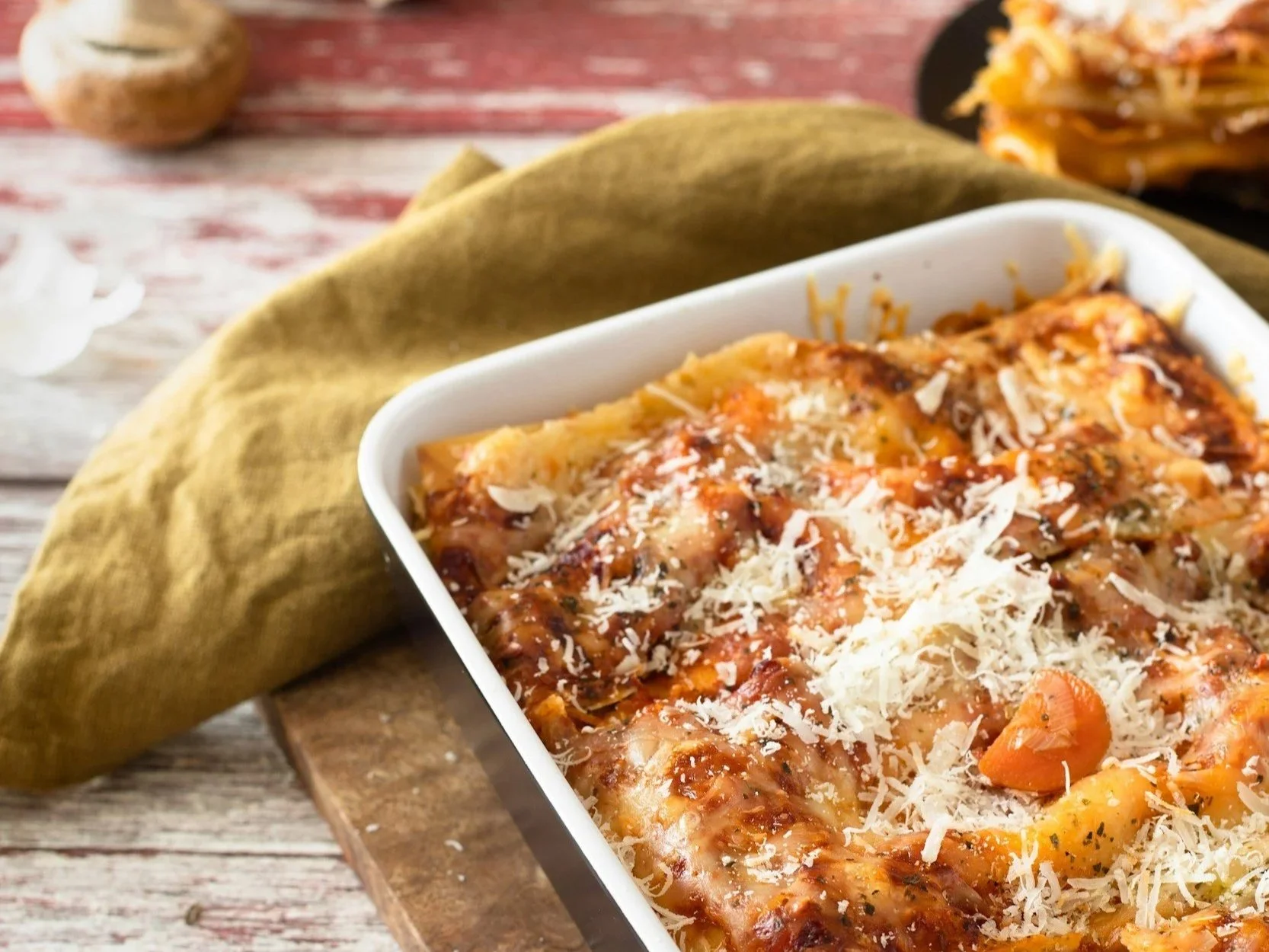
I was making lasagne one evening last summer… properly, you know, béchamel, bolognese, pasta, repeat. The kind where you're stirring the white sauce for longer than feels reasonable and convincing yourself it's worth it.
And somewhere between the second layer of pasta and debating whether I'd put enough nutmeg in the béchamel, my brain wandered. Brand strategy works exactly the same way.
Whether you use jar béchamel, fresh pasta, or make it all from scratch, it doesn't matter. It's still a lasagne however it's layered. And it's the same with brand strategy. Every business is different. We have different consumers, different models; some of us are service-based, some sell products, some do a bit of both. But we all have to layer the elements of brand strategy to nail our foundations.
And that's not to say your ready meal lasagne isn't a "real lasagne", or that your Canva templates are any less valid than my Illustrator files. What I'm saying is this: how we tackle each layer, and the thought we put into each element, is how we define what's important. Not just to us, but to our consumer. And that's how we'll be outwardly perceived.
So what are the layers?
Just like a lasagne, brand strategy has a specific order. Skip a layer, rush it, or get them the wrong way round and the whole thing falls apart. Get it right and everything holds together — and people keep coming back for more.
Layer one: know your audience
Before anything else. Before colours, before a logo, before you even think about a font. Who are you actually talking to?
Not just "women aged 25-45" or "small business owners." Really know them. What are they Googling at 11pm? What made them realise they needed what you offer? What would make them trust you over someone else?
Your brand speaks to them, not to everyone. And definitely not just to you.
Layer two: get clear on your values
What do you stand for? How do you work? What's the tone of voice that feels authentically like your business?
This isn't a fluffy brand exercise, your values inform every decision that follows. If you're straight-talking and no-nonsense, your brand should feel that way too. If you're warm and nurturing, that should come through in every touchpoint. It's the flavour that runs through the whole dish.
Layer three: nail your positioning
Where do you sit in your market? What makes you different? Why would your ideal client choose you over the three other options they've got open in their browser right now?
Vague positioning leads to a vague brand. And a vague brand attracts nobody in particular. This is the layer most businesses skip entirely, and it's usually the reason their brand isn't bringing in the right clients.
Layer four: your visual identity
This is where I come in. And notice that it's layer four, not layer one.
Your logo, your colour palette, your typography, your brand guidelines. Built on everything above, not instead of it. A visual identity designed without the foundations is just decoration. With the foundations, it becomes the thing that makes your ideal client stop scrolling and think "this is for me."
Layer five: your touchpoints
Your website. Your social media. Your proposals, your packaging, your email signature. Every single one of these is another layer. And every layer should feel consistent, like it belongs to the same dish.
Not identical. Not rigid. But coherent. You can tell a good lasagne has been made with care even before you taste it. The same goes for a brand.
The oven: consistency
A lasagne needs time in the oven to come together. And a brand needs consistency over time to build recognition and trust.
You tend to it. You show up the same way, every time, everywhere. You evolve it as your business grows, but you don't rip it apart every six months because you spotted a new trend on Instagram.

The ready meal isn't the problem
Here's the thing I really want you to take away from this.
There is no shame in starting with Canva. There is no shame in using a template, a website builder, a logo you put together yourself when you were just getting going. That's the ready meal lasagne — and it fed you when you needed feeding.
But there comes a point where you're ready to make it properly. Where you want to understand the layers, get the order right, and build something that actually holds together. Where you want your brand to work as hard as you do, not just look presentable.
That's the point where strategy comes before design. Where you ask the right questions before you open a single design file. Where you think about your consumer before you pick a colour palette.
And that's exactly what I help with.
Ready to check your own layers?
I've put together a free Brand Strategy Recipe Card — a simple one-pager that helps you audit your brand layer by layer, so you can see exactly where your foundations are solid and where there might be gaps.
Or if you'd rather just have a proper conversation about your brand, no jargon, no hard sell, I'm always up for a chat.